
Yes, you can usually vacuum a washable area rug between washes. Drying depends on its care instructions, so check whether it is suitable for tumble drying. Choosing the right size, colour and pile also helps the rug suit your room and makes everyday dirt less noticeable. This guide covers washable rug care and how to choose a practical style for your space.
Key Takeaways
- Use the care instructions to decide whether a rug can go in the tumble dryer, and choose a cleaning routine that suits life with children or pets.
- Explore how colour, pattern and pile can make everyday marks less noticeable while keeping the room’s look balanced.
- Match the rug’s dimensions to your washing machine’s capacity before washing, so it has room to move in the drum.
- Consider the After the Feast Area Rug’s rust, olive, ochre and aged cream palette when choosing a design with warmth and character.
Can washable rugs go in the tumble dryer?
Only tumble-dry a rug if its care label allows it. Vacuuming and laundering instructions depend on its construction, so use the label as your guide to suitable care.
Vacuuming and drying routines
Vacuum washable rugs weekly between washes, using a setting suited to the pile. Before drying, read the label: some rugs allow tumble drying, while others need a different method. Regular care can be particularly useful in homes with children or pets, where crumbs, fur and muddy paw marks are common. Unlike traditional area rugs, washable styles are designed for machine laundering, but care requirements still depend on the rug’s construction.
Natural and synthetic rug materials
Check the fibre details as well as the care label before choosing a rug. Natural-fibre and synthetic options may respond differently to washing and heat, so don’t assume that a washable label means every cleaning method is suitable. In a family room, consider how the surface feels underfoot and how its pile handles daily use. For a high-traffic space, follow the stated washing routine; busy kitchens and entryways may need washing every 2 to 4 weeks.
Machine-washable rugs and runners
A machine-washable rug or runner can suit a narrow space such as a hallway, where shoes bring in dirt. Check the care instructions and dimensions before washing: a runner that fits the floor may still be too large for your machine’s drum. Vacuum between washes, and leave the rug enough room to move rather than packing it tightly alongside other laundry.
Fading, shrinking and curling concerns
Fading or shrinking can become a concern if washing or drying goes beyond the rug’s care instructions, so use the stated settings. Curling may also need attention: reverse-roll a new washable rug and leave it rolled for 24 hours to help ease creases. For homes with pets or children, regular vacuuming helps manage loose dirt between washes, while the care label guides laundering.
Colours, patterns, and pile for hiding dirt
Colour, pattern and pile shape how everyday marks look on a rug. Choose each with the room’s light, use and desired comfort in mind.
Colours and patterns for hiding dirt
Mid-toned colours such as taupe, rust and olive can make dust and small marks less noticeable than very pale or very dark colours. A varied pattern can also disguise scattered crumbs or dry soil. For example, a softly mottled design can suit an entryway where shoes track in dirt. Whatever the palette, attend to spills promptly.
Pile heights and rug types
Low-pile rugs have a flatter surface, making loose crumbs easier to spot and vacuum. They can work well beneath a dining table. A deeper pile feels softer underfoot and may suit a bedroom or reading corner, but can make debris more noticeable between cleans. Choose a pile height that balances comfort with the room’s daily demands.
Texture and rug construction
Texture affects how light falls across a rug, while construction shapes its surface and feel. A subtle loop or varied weave can make lint and everyday dust less obvious than on a smooth, solid-colour surface. Look at the material and pile in the room’s natural light. In a family space, a patterned, low-pile design can combine practical vacuuming with visual texture.
In a hallway, balance a colour or pattern that disguises dirt with easy upkeep. In a lounge, comfort may matter more. Matching the rug’s colour and texture to the space helps it feel connected to the rest of the room.
Washing machine capacity and rug size
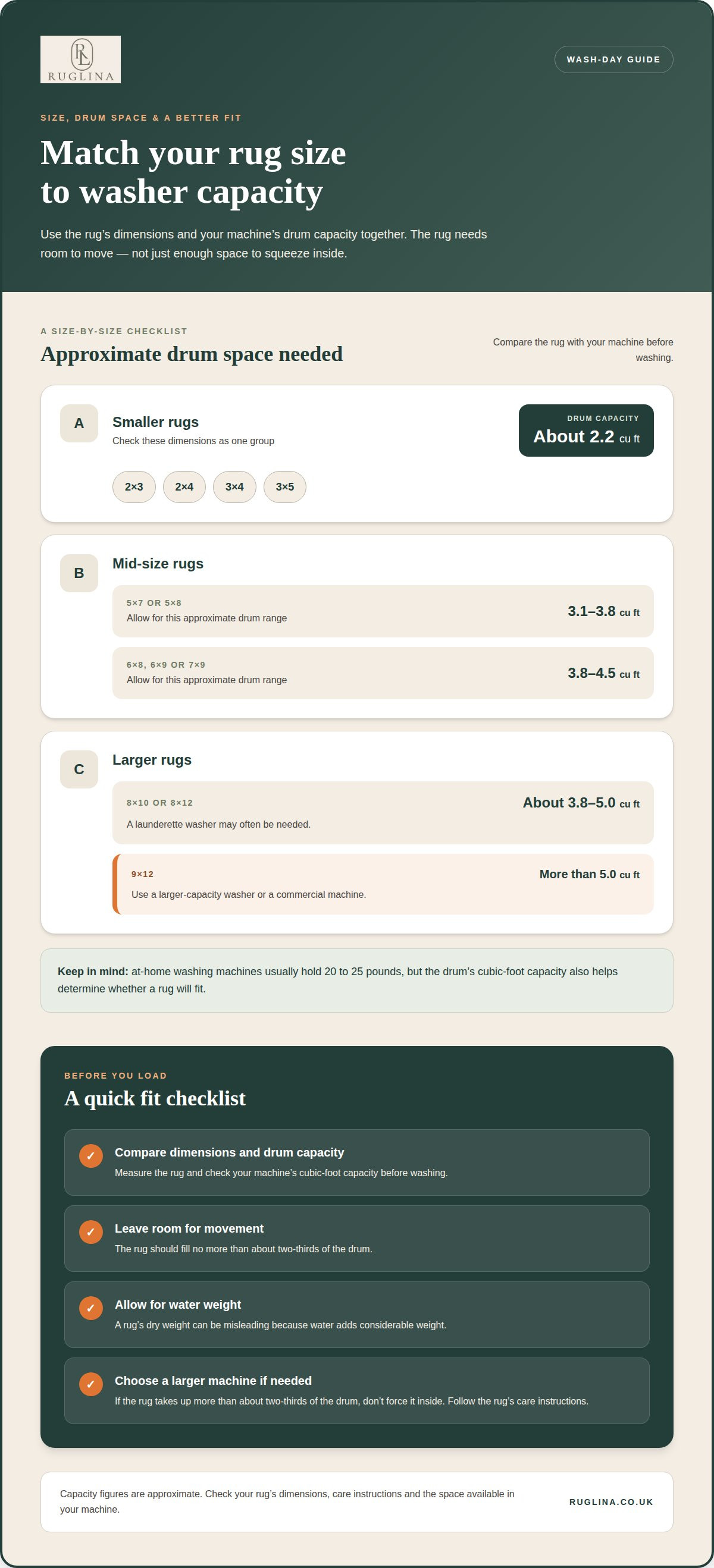
Before washing, match the rug’s dimensions to your machine’s capacity. Both the rug’s size and the available drum space matter.
Washing-machine compatibility
At-home washing machines usually hold 20 to 25 pounds, but the drum’s cubic-foot capacity also helps determine fit. A 2x3, 2x4, 3x4 or 3x5 rug needs about 2.2 cubic feet. For a 5x7 or 5x8, allow about 3.1 to 3.8 cubic feet; 6x8, 6x9 or 7x9 sizes need about 3.8 to 4.5 cubic feet.
Measure the rug and compare its size with your machine’s capacity before loading it. An 8x10 or 8x12 rug may need about 3.8 to 5.0 cubic feet, and often a launderette washer. A 9x12 needs a washer larger than 5.0 cubic feet or a commercial machine.
Machine washing
Leave room for the rug to move: it should fill no more than about two-thirds of the washing-machine drum. Dry weight can also be misleading, because water adds considerable weight.
Follow the rug’s care instructions and use a machine with enough capacity for its dimensions and wet weight. If the rug fills more than two-thirds of the drum, choose a larger machine rather than forcing it inside. The load needs room to move, and overfilling can put excess strain on a small home washer.
Choosing a washable rug by design
A good choice balances the room’s look with your cleaning routine. Compare design and care requirements before deciding.
Rug design choices
Start with the room where the rug will go. A narrow runner can define a hallway, while a larger rug can bring a seating area together. For a balanced colour scheme, take cues from two existing details, such as the sofa and curtains. In a dining space, consider how chairs move over the rug and whether its care instructions suit likely spills.
Next, weigh pattern and pile against everyday use. A small, varied pattern can soften the appearance of scattered crumbs, while a low pile is easier to vacuum around dining chairs. If comfort matters most in a bedroom, choose a surface that feels pleasant underfoot. Check the cleaning instructions, including tumble-drying guidance, before choosing a design.
Care considerations
Think about the features that matter in your home. A hallway runner may need a practical surface and suitable length, while a living-room rug may be chosen for colour and comfort. Consider care requirements alongside design.
Think about whether the rug fits your washing machine, how often its room needs cleaning and whether its style works with your furniture. A design that suits several rooms may remain useful if you rearrange the furniture. A bold pattern chosen for just one corner may be harder to place elsewhere.
For a clear decision, note the room, preferred shape and care needs. Compare each option against those points. The best fit balances practical washing with a style you’ll enjoy living with.
RUGLINA: After the Feast Area Rug – Rust, olive, ochre and aged cream – RL10031
RUGLINA’s After the Feast Area Rug – Rust, olive, ochre and aged cream – RL10031 brings a warm, layered palette to your room. Rust, olive, ochre and aged cream can sit comfortably alongside natural wood, neutral upholstery or cushions in related tones. Consider it when you want colour and character without losing a considered, balanced feel.
Start with the colours already in your space. Pick out one or two tones from the rug for cushions or soft furnishings, or use aged cream to connect with lighter walls. In a living room, rust and ochre can add warmth, while olive can echo plants or other muted green details. The palette offers several subtle ways to coordinate.
Consider shape as well as colour. RUGLINA offers Round Rugs and Runner Rugs for different layouts: a round rug can soften a compact seating arrangement, while a runner can define a hallway. Choose a shape that works with your furniture and walking routes, then consider how its colours will look in the space.
If washable care is essential, make the specific rug’s care instructions part of your decision. A design’s colours do not tell you whether it can be machine-washed or tumble-dried. Balance care needs with the room’s use, your preferred feel and the style you want, so practical needs and appearance both count.
For a home with warm wood, cream upholstery or olive accents, the After the Feast palette offers a clear starting point. Its colours can bring a considered sense of warmth and character to your space.
The room’s layout shapes how you use it: where you walk, sit and gather, and what you want the space to feel like. For a washable area rug, its care guidance can inform your choice, alongside colours and proportions that feel at ease with your furniture. You can build a palette around the warm rust, olive, ochre and aged cream of the After the Feast Area Rug, or consider a different shape for your layout. RUGLINA offers Round Rugs and Oval Rugs, giving you distinct forms to consider as you plan the room. The team’s rug knowledge can help you explore those design choices in the context of your home. The details that matter to you can guide a choice that feels like a natural part of everyday living. Contact RUGLINA about washable rugs to continue exploring your options.
Frequently Asked Questions
Can I vacuum a washable rug?
Yes. Use slow, overlapping passes to cover the surface evenly, then turn the rug and vacuum the reverse if its construction allows. This can help lift grit caught beneath the pile, especially near a doorway. For loose crumbs, a hand-held attachment gives you more control around furniture legs and in narrow spaces than moving a heavy vacuum repeatedly.
How Often Should You Wash Your Washable Rug?
There is no single washing schedule for every home. Wash the rug when dirt remains after routine vacuuming, a spill leaves a mark or an odour lingers. A rarely used guest room may need less attention than a kitchen route used throughout the day. Treat fresh spills promptly, as dried residue can be harder to remove during routine cleaning.
Natural Cotton or Washable Wool: Which Material Is Right for You?
Cotton often feels lighter, while wool can feel springier and warmer underfoot. For a washable rug, do not choose by softness alone: natural fibres can respond differently to moisture and heat, and some wool constructions may felt or shrink. Compare the care guidance for the specific rug with your preferred texture and the demands of the room.
What Makes A Rug Machine Washable?
A rug is machine-washable when its complete construction is designed to withstand a washing-machine cycle. Stitching, edge finishing and joined layers all affect how it holds together during washing. Two rugs with similar-looking surfaces can have different care requirements, so fibre appearance alone cannot establish whether a particular design is washable.
What is a washable area rug?
A washable area rug is a movable floor covering designed for washing, unlike fitted carpet, which stays attached to the floor. It can define a seating area, add softness beside a bed or bring colour to a dining space. Its portability also makes it easier to reposition when you rearrange furniture or change how you use a room.
What materials and backing make an area rug machine washable?
No single fibre or backing makes every rug machine-washable. The surface yarn, backing, binding and the way those parts are joined all affect the finished construction. If a rug has a removable layer, distinguish it from the full rug before washing. Product-specific care instructions explain which parts are designed for machine cleaning.
Tags: